Pink Flowers Clipart, Watercolor Floral Review
As a designer who spends hours troubleshooting stitch counts and fabric tension, I approach every new asset with a mix of excitement and skepticism. When I first encountered Pink Flowers Clipart, Watercolor Floral, my immediate thought wasn't about the file format or the resolution, but rather how this specific aesthetic would translate from a screen to a needle. In the world of machine embroidery, the gap between a crisp digital image and a tactile stitched piece can be wide, often determined by the complexity of the lines and the softness of the colors.
This review focuses on the practical application of these graphics in real-world scenarios. Whether you are an Etsy seller preparing a holiday collection or a hobbyist creating a personalized gift for a new mother, understanding how Pink Flowers Clipart, Watercolor Floral behaves under the hoop is crucial. The product description highlights that you receive one zip file containing three PNG files with a transparent background and 300 DPI resolution. While these technical specs sound promising, they do not tell the whole story of how the design will perform when converted into a physical embroidery project.
The First Impression: Mood and Visual Personality
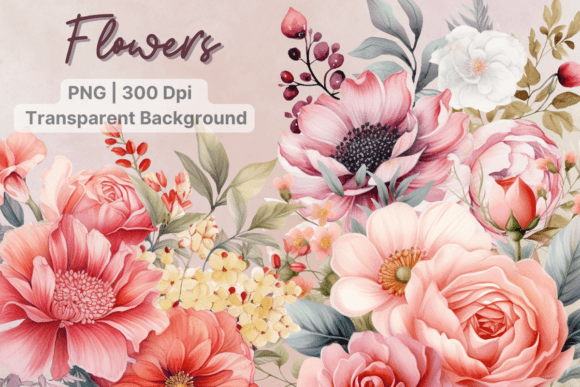
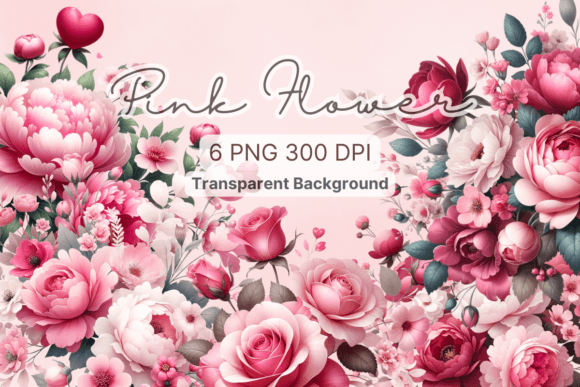
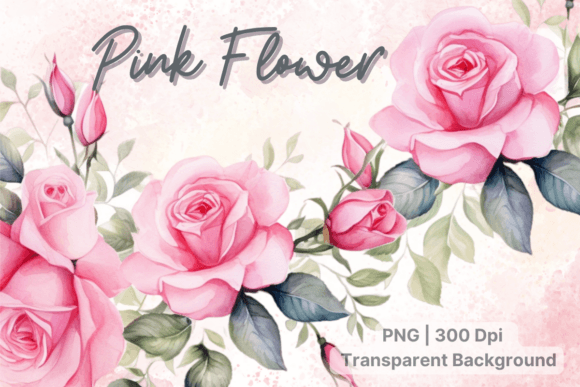
The watercolor style of Pink Flowers Clipart, Watercolor Floral offers a distinct advantage over rigid vector line art. It brings a soft, organic feel that mimics hand-painted textures. For a designer, this suggests a natural fit for projects requiring a gentle touch. The color palette, dominated by pinks, evokes feelings of tenderness, romance, and springtime freshness. This mood makes it an ideal candidate for baby items, bridal accessories, or boutique home decor where the goal is to create a warm, inviting atmosphere.
However, the "watercolor" look in a digital graphic relies heavily on gradients and bleeding edges. When converting these Illustrations into a machine embroidery design, those soft transitions must be interpreted as stitches. If the conversion isn't handled with care, the delicate edges might become jagged or lose their fluidity. The layout of the flowers suggests a scattered, natural arrangement rather than a rigid geometric pattern. This freedom is excellent for tote bag designs or aprons where a casual, artistic vibe is desired, but it requires a larger hoop size to capture the full essence of the composition without cutting off the petals.
Real-World Application: From Screen to Stitch
Let's imagine a specific scenario: You are launching a small shop specializing in handmade gifts. You decide to create a custom embroidered sweatshirt featuring Pink Flowers Clipart, Watercolor Floral for a Valentine's Day collection. The challenge here is balancing the softness of the watercolor aesthetic with the durability required for a garment that will be worn and washed frequently.
In this context, the 300 DPI resolution mentioned in the product details is a solid starting point. It ensures that when you trace the outline for digitizing, there is enough data to create smooth curves. However, the success of the final finished product depends entirely on your digitization choices. A simple satin stitch border might be too harsh against the watercolor background. Instead, using a combination of satin stitch for the outlines and fill stitch for the flower centers could mimic the depth of the original Graphics. For the pink tones, selecting high-quality variegated threads would help replicate the subtle shifts in the watercolor effect, adding a layer of professionalism that customers notice immediately.
I also envision this design working beautifully on nursery decor. A pillow cover featuring Pink Flowers Clipart, Watercolor Floral could serve as a stunning centerpiece for a baby shower gift. The transparency of the PNG files allows for easy placement on mockups, helping you visualize the design on different fabric textures before committing to the actual stitching. This is particularly valuable for Etsy sellers who need to create compelling listings that accurately represent the final item. The softness of the floral theme pairs well with cotton or linen blends, which are common choices for baby products due to their comfort and breathability.
Navigating Potential Pitfalls
While the potential is high, there are areas where Pink Flowers Clipart, Watercolor Floral requires careful consideration. One major concern is the application on textured or stretchy fabrics. Watercolor designs often rely on clean, continuous lines. On a thick, nubby wool or a highly stretchy jersey knit, the stabilizer may not hold the fabric flat enough to maintain the integrity of the flower shapes. The result could be a distorted image where the petals look uneven or the colors bleed into the fabric texture.
Another critical factor is the scale. These graphics are likely best suited for medium to large applications. Attempting to use them for tiny details, such as the cuff of a hat or a small logo on a pen, might lead to frustration. Small details in watercolor art can easily get lost in the stitching process, especially if the thread count is too dense. If you attempt to shrink the design too much, the stitch density might become too high, causing the fabric to pucker or the threads to break. For curved surfaces like caps, the design needs to be carefully adjusted to follow the curvature of the head, or the flowers may appear stretched at the top and compressed at the bottom.
Furthermore, dark fabrics present a unique challenge. Watercolor effects often depend on light backgrounds to show their true colors. Embroidering pastel pinks directly onto a black hoodie without a proper underlay or backing could result in muted, muddy colors. In such cases, you might need to add a white underlay or a separate background element to make the flowers pop, which adds complexity to the machine embroidery design.
Practical Designer Notes for Success
Before you rush to start stitching, there are several steps every professional should take to ensure the quality of your work. First and foremost, always test the design on scrap fabric that matches your intended project material. This allows you to see how the thread colors interact with the fabric and whether the stitch density is appropriate. If the design looks too sparse or too crowded, adjustments can be made in the digitizing software before wasting expensive materials.
It is also wise to inspect the design in black and white mode. This helps you evaluate the contrast and clarity of the shapes without the distraction of color. If the design loses its definition in grayscale, it might struggle to convey its beauty once stitched. Additionally, check the licensing terms provided with the download. Even though the files are described as high-quality digital embroidery file assets, you must confirm whether you have the right to sell finished products created with Pink Flowers Clipart, Watercolor Floral or if the license is restricted to personal use only.
Using the proper stabilizer is non-negotiable for maintaining the shape of the flowers. For lightweight fabrics like tea towels or aprons, a cut-away stabilizer provides the necessary support to prevent puckering. For heavier items like sweatshirts, a tear-away might suffice, but testing is key. Finally, consider the end-use of the product. If it is a commercial item meant for frequent washing, ensure that the design is robust enough to withstand friction and detergent without fraying.
Final Thoughts on Value and Appeal
Pink Flowers Clipart, Watercolor Floral offers a versatile foundation for creative entrepreneurs looking to add a touch of elegance to their offerings. Its soft aesthetic resonates well with buyers seeking personalized gifts, handmade products, and boutique branding. By paying attention to the nuances of digitization, fabric selection, and stabilization, you can transform these digital Graphics into stunning physical artifacts that build customer trust and enhance your brand's reputation.
Whether you are crafting a single personalized gift for a friend or building a line of small shop products for a global audience, this design has the potential to elevate your work. Just remember that the magic lies not just in the source file, but in the skillful execution of the embroidery process. Take the time to plan, test, and refine, and you will find that the resulting embroidery project is far more than just a stitched image—it becomes a cherished piece of art.